In short
- Capitol Reef requires a 4WD vehicle and a river ford.
- Hanksville allows drones and sits outside the park.
- Neither location is safe or accessible when wet.
In this article
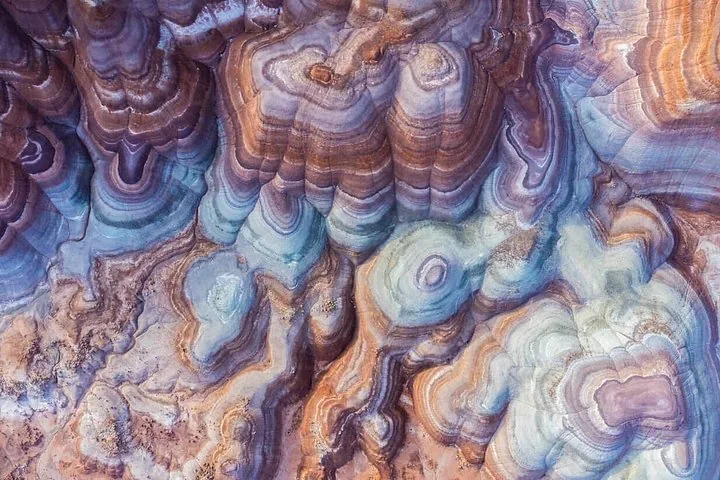
Utah features two distinct areas of softly-contoured banded clay known as the Bentonite Hills. Choosing between the Capitol Reef location and the Hanksville location depends on your vehicle and your photography plans.
What is the difference between the two Bentonite Hills locations?
The Capitol Reef hills are remote and require a river crossing. The Hanksville hills are easily accessible and allow drones.
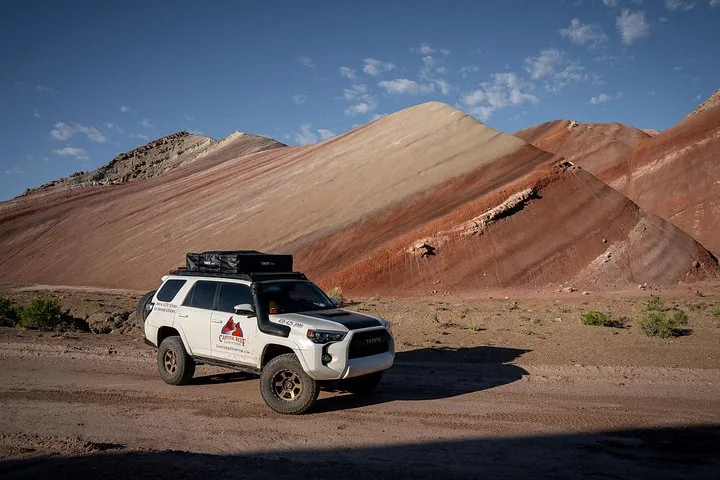
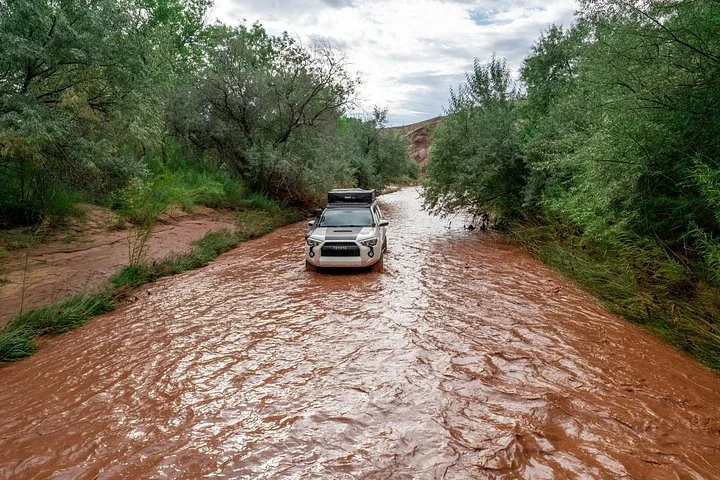
The Capitol Reef Bentonite Hills sit along the Hartnet Road inside the national park. You must drive a high-clearance 4WD vehicle and ford the Fremont River to reach them.
The Hanksville location is slightly east of the park boundary on Cow Dung Road. It sits near the Mars Desert Research Station (MDRS) and takes less time to visit.
Where are the Bentonite Hills in Capitol Reef National Park?
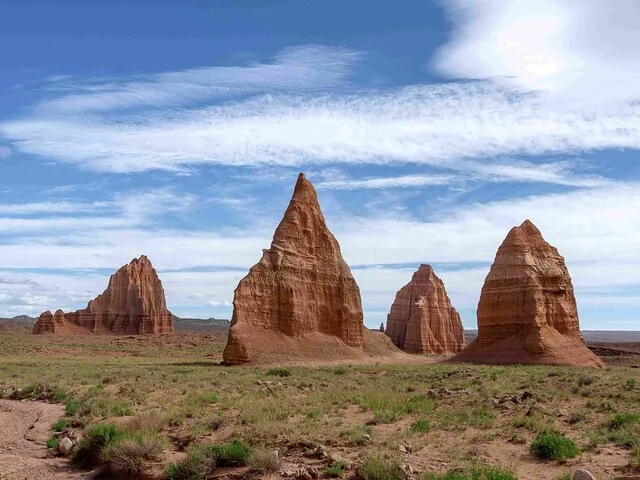
They are located along the Hartnet Road section of the Cathedral Valley Loop.
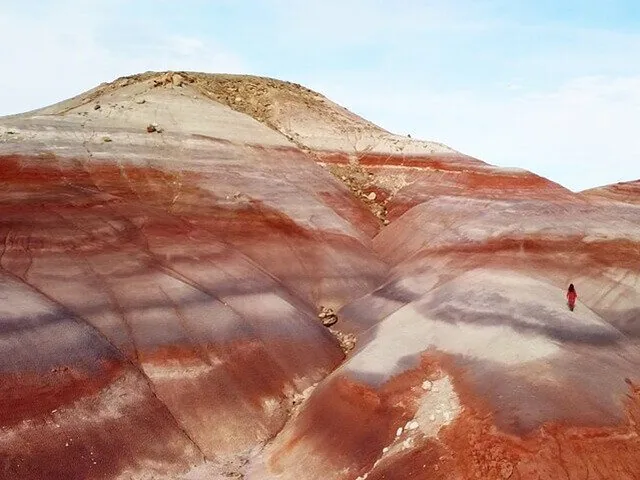
This area displays popcorn-like clay textures with bands of maroon, green, and gray. You will need roughly one hour to explore this specific spot. The entire Cathedral Valley driving loop takes 6 to 8 hours to complete.
How do I reach the Hanksville Bentonite Hills?
You drive just west of Hanksville onto Cow Dung Road.
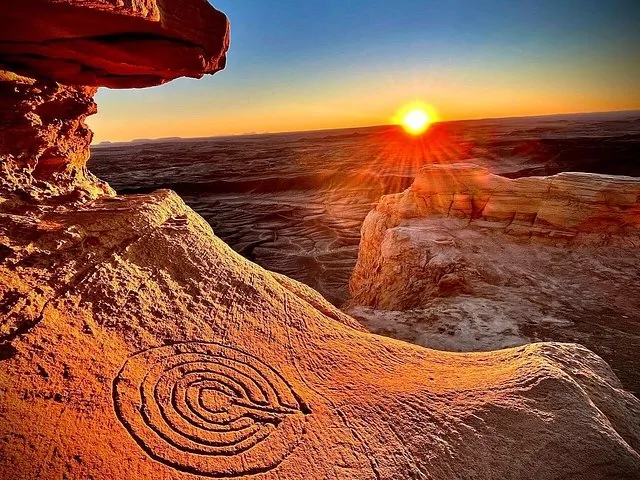
This popular secondary area resembles a Martian landscape. Visitors typically spend 1 to 2 hours here. Many people pair this location with a trip to Moonscape Overlook or Factory Butte.
Are drones allowed at the Bentonite Hills?
You can fly drones at the Hanksville location, but not in Capitol Reef.
The National Park Service strictly bans drones inside Capitol Reef National Park boundaries. If you want to capture aerial photos of the banded clay, you must visit the Hanksville location.
| Feature | Capitol Reef | Hanksville / MDRS |
|---|---|---|
| Location | Inside National Park | Outside National Park |
| Drone Flying | Strictly Prohibited | Allowed |
| Vehicle Needs | 4WD High Clearance | Standard Clearance OK |
Do I need a 4WD vehicle for both locations?
You only need a high-clearance 4WD vehicle for the Capitol Reef location.
The National Park Service defines high clearance as at least 8 inches. The drive to the Capitol Reef hills involves deep sand and a river ford. You can often reach the Hanksville location in standard vehicles, though dirt roads are involved.
Can I hike on the Bentonite Hills?
Foot travel is heavily restricted to protect the fragile clay.
You must limit your walking to firm, previously disturbed areas or wash bottoms. Do not travel on the clay when it is wet. Wet bentonite clay is highly slick, easily damaged, and leaves scars for years.
Questions travellers ask
Can you drive to Bentonite Hills in a 2WD car?
You cannot drive to the Capitol Reef location in a 2WD car because you must ford the Fremont River. You can generally access the Hanksville location in a standard 2WD vehicle.
Why are the Bentonite Hills so colorful?
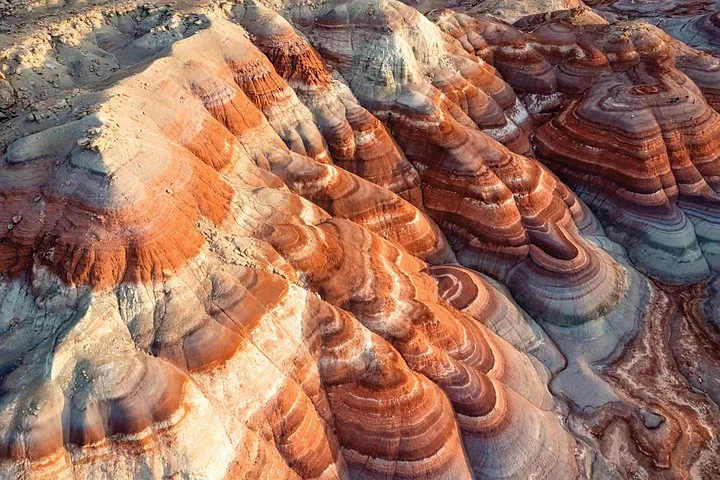
The hills were formed from volcanic ash deposited between 150 and 157 million years ago. Altered minerals in the ash create the distinctive bands of color.
Are there two different Bentonite Hills locations?
Yes. One is inside Capitol Reef National Park on the Hartnet Road. The other is just west of Hanksville near the Mars Desert Research Station.